How to Cool an Apartment Without AC in Arizona (A Realistic, Renter-Friendly Guide)
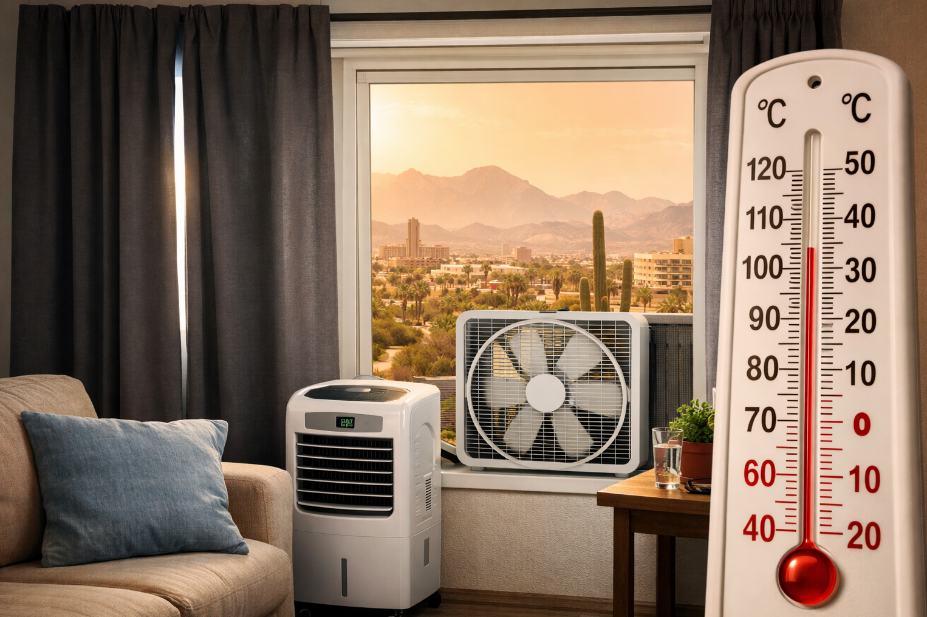
Arizona heat is a different beast—especially in an apartment where you can’t just “upgrade the HVAC” or rip out windows. The good news is you can make your place noticeably cooler (and safer) without central A/C by using a simple building-science game plan:
- Stop heat from getting in (especially through windows)
- Dump heat at the right time (night + early morning)
- Use fans and evaporation correctly (comfort vs. safety)
- Cut indoor heat sources (small changes, big payoff)
- Have a heat-safety backup plan (because extreme heat can be dangerous)
This post walks you through exactly what to do—step by step—for Arizona apartments, where sunny afternoons and hot walls can turn your unit into an oven.
First, understand what’s heating your apartment in Arizona
If your apartment feels like it’s “holding heat” even after sunset, that’s usually because of:
- Solar heat pouring through windows (especially west-facing)
- Heat stored in walls/roof that radiates inward for hours
- Indoor heat sources (oven, dryer, electronics, even lighting)
- Wrong-timed ventilation (letting hot air in during the day)
In Arizona, your windows are often the #1 controllable factor. That’s why the first half of this guide is about blocking sun like a pro.
The Arizona rule: block sun during the day, flush heat at night
Think of your apartment like a cooler:
- Daytime: close it up + shade it hard
- Night / early morning: open it up + ventilate aggressively
- Then seal the “cool” inside before the outside heats up again
This works best in places with cooler nights and a day-night temperature swing—which many parts of Arizona get (even when daytime highs are brutal). Guidance from NREL’s home-cooling ventilation resource emphasizes using cool night air and cross-ventilation strategically.
Step 1: Win the window battle (the biggest difference-maker)
Why windows matter so much in Arizona
Direct sun can add a shocking amount of heat through glass. In apartments, you can’t add insulation to the walls, but you can dramatically reduce solar heat gain through windows with renter-friendly tools.
The U.S. Department of Energy specifically notes that window films help block solar heat gain and are best in climates with long cooling seasons.
Start with your “hot windows”
Do this quick check today:
- Which rooms get blasted by sun after 2 pm?
- Which windows face west? (Usually the hottest in Arizona afternoons)
- Which rooms stay hot the longest into the evening?
Those are your priority.
The best renter-friendly window upgrades (ranked)
1) Blackout or thermal curtains (fast + high impact)
- Put them on the windows that get direct sun.
- Keep them closed during peak sun hours.
- For maximum results: curtains should fit wide and long (less light leakage = less heat).
2) Reflective or solar window film (high impact, renter-friendly if chosen right)
Window film can be a huge win because it targets the actual problem: solar heat hitting your glass.
The DOE highlights that window films applied to glazing help block solar heat gain and reduce glare/UV.
Tip for renters: choose static cling or film marketed as removable, and keep the packaging.
3) Temporary shade options (if your lease allows it)
Exterior shading is often more effective than interior shading because it stops heat before it reaches the glass. If you can’t install exterior screens, you can still do:
- Removable shade cloth (balcony/patio setups)
- Tension-rod shades inside the frame
- A “double layer” approach: film + blackout curtain
If you’re in SRP territory (Phoenix metro), SRP’s rebate program notes qualifying shade screens must block at least 80% of solar heat gain on sunstruck windows (west/south/east). Even if you can’t use the rebate as a renter, the performance requirement is a helpful benchmark when shopping.
The “west window” emergency setup (if your apartment bakes in the afternoon)
If you have west-facing windows that turn your unit into a toaster, try this exact setup:
- Apply reflective (or static cling) film
- Hang blackout curtains
- Add a tension rod behind the curtain and hang a second layer (even a thick blanket helps)
- Seal gaps around the curtain edges (clips or Velcro dots)
It’s not “pretty,” but it works.
Step 2: Use Arizona’s nights to your advantage (night flushing)
What is night flushing?
It’s simply dumping the heat your apartment stored all day by using cooler night air—then sealing the cool in before morning heats up.
NREL’s ventilation guide explains you can create natural cross-ventilation by opening windows/doors and positioning openings to move air through the home, and it specifically recommends taking advantage of cool night air.
The timing that actually works
- After sunset (or when outside is cooler than inside): open windows for cross ventilation
- Early morning: close everything before the outside warms up
- Daytime: curtains closed, windows closed (unless you’re using an evaporative cooler correctly—more on that later)
If you leave windows open into the hot part of the morning, you’re literally inviting heat back in.
How to set up cross-ventilation in an apartment (even if airflow is bad)
Cross-ventilation means air enters from one side and exits from another.
Try this:
- Open a window on the cooler side (often shaded side)
- Open a second window across the unit (or your front door if safe/allowed)
- Use a fan facing outward in the hotter window to exhaust hot air
- Use another fan to pull cooler air inward
You’re creating a simple “air path.”
Step 3: Fans are amazing… but Arizona heat needs safety rules
Fans don’t lower the room temperature much. They cool you by increasing evaporation of sweat. That’s helpful—until it isn’t.
The CDC’s fan safety threshold
The CDC advises: use fans only if indoor temperatures are below 90°F. Above 90°F, a fan can increase body temperature.
WHO’s guidance (especially in very high heat)
WHO notes fans may provide relief, but above 35°C (95°F) they may not prevent heat-related illness.
What this means in real life (Arizona apartment edition):
- Fans are great at night, mornings, and “hot but not extreme” indoor temps.
- If your apartment’s indoor temperature is staying 90°F+, your priority shifts from comfort hacks to heat safety (cooling centers / A/C refuge).
Best fan setups for apartments
- Box fan in a window (exhaust): blows hot air out
- Second fan pulling air in: from the coolest window/side
- Ceiling fan direction (if you have one): in summer, most people want a downward breeze
Even one properly placed fan can feel stronger than three fans randomly aimed.
Step 4: Evaporative cooling (“swamp coolers”)—Arizona’s secret weapon (when used right)
Evaporative coolers can work very well in hot, dry climates. USGS notes that in low-humidity, hot climates, an evaporative cooler can lower air temperature by about 20°F, while increasing humidity—and they work best in the dry parts of the U.S. (which includes much of Arizona).
When evaporative coolers work best in Arizona
- Very dry days (often early summer)
- Nighttime / mornings
- Smaller spaces (bedroom, office corner)
When they work worse
- During monsoon humidity spikes
- In tiny sealed rooms with no exhaust (humidity builds up)
The apartment-friendly rule for evaporative coolers
They need airflow. Don’t run them in a sealed room all day.
Do this instead:
- Place the unit near you (spot cooling)
- Crack a window for exhaust
- If the room starts feeling sticky, reduce use and switch to fans/ventilation
Step 5: Reduce indoor heat sources (the “invisible heater” problem)
Even if you block windows and ventilate well, you can sabotage yourself by generating heat inside.
The DOE recommends spot ventilation (bathroom/kitchen exhaust) to remove heat and humidity generated indoors, and also suggests minimizing indoor heat generation (like using a microwave instead of stovetop/oven).
High-heat culprits in apartments
- Oven and stovetop
- Dryer (if in-unit)
- Dishwasher heat dry
- Incandescent bulbs
- Gaming PCs + big TVs
- Long hot showers (adds humidity + heat)
Replace with low-heat routines
- Cook with microwave, air fryer, toaster oven when possible
- Run laundry/dishwasher at night
- Turn off “heat dry”
- Switch to LEDs
- Use bathroom/kitchen exhaust while cooking or showering (and vent it outside if your system does)
Step 6: The “seal it up” trick most renters miss (drafts go both ways)
Weatherstripping and door draft blockers are usually marketed for winter—but in Arizona, stopping hot air infiltration matters too.
Easy renter moves:
- Door draft stopper (front door)
- Temporary weatherstripping on leaky window edges
- Close off unused rooms during peak heat (cool one zone well)
Step 7: Bedroom survival—how to sleep without A/C in Arizona
Sleep is often the hardest part.
Night cooling plan (simple but effective)
- Night flush the apartment (windows open + fan exhaust)
- Cool shower before bed
- Use a thin cotton sheet, skip heavy comforters
- Put a fan near the bed (if indoor temp is safe)
- Freeze a water bottle and place it near your feet (or use a wrapped cold pack)
Morning routine
Close windows and blinds early—before the sun turns aggressive.
Arizona heat safety: when “no A/C” becomes a health risk
This part matters. Heat can be dangerous, and Arizona heat waves can push indoor temps to unsafe levels.
When you should stop relying on “home hacks”
If your indoor temperature is staying around 90°F+ for hours, especially overnight, you need a safer plan.
CDC explicitly recommends finding an air-conditioned location when needed and notes you can use 2-1-1 to locate resources.
Arizona resources
- 211 Arizona heat relief resources (cooling sites, help finding relief)
- Maricopa Association of Governments Heat Relief Network also directs people to call 211 for heat relief sites
Hydration basics (especially in Phoenix-area heat)
NWS Phoenix emphasizes drinking water consistently—even indoors—and warns against alcohol (dehydration risk).
If anyone in your household is high-risk (older adults, babies, pregnancy, chronic illness), prioritize cooling centers/A/C refuge sooner rather than later.
A complete daily schedule for cooling an Arizona apartment without AC
Morning (5–9 AM)
- Open windows for cross ventilation
- Run fans to flush hot air out
- Prep curtains/blackouts for daytime
- Do heat-making chores now (cooking, laundry) if possible
Midday to late afternoon (10 AM–6 PM)
- Windows closed
- Curtains closed on sun-facing windows
- Avoid oven/stovetop
- Use spot ventilation when cooking/showering
- Use personal cooling (cool cloths, hydration)
Evening (after sunset)
- Re-open for night flushing when outdoor air is cooler
- Exhaust fan setup to dump heat
- Evaporative cooler (if using) with a cracked window (spot cooling)
Overnight
- Keep airflow for comfort if indoor temps are safe for fans
- If indoor temps remain dangerously high: go to a cooled space (use 211)
Quick shopping list (renter-safe, high impact)
- Blackout curtains (sun side)
- Reflective/static cling window film
- Door draft stopper
- 1–2 box fans (for exhaust + intake)
- Light bedding (cotton/linen)
- Optional: portable evaporative cooler (best for dry days)
Final thoughts
Cooling an Arizona apartment without A/C isn’t about one “magic hack.” It’s about a system: block sun, ventilate at the right time, reduce indoor heat, and keep safety front-and-center. With the right setup—especially on west-facing windows—you can often cut that miserable afternoon heat noticeably and make nights far more tolerable.